
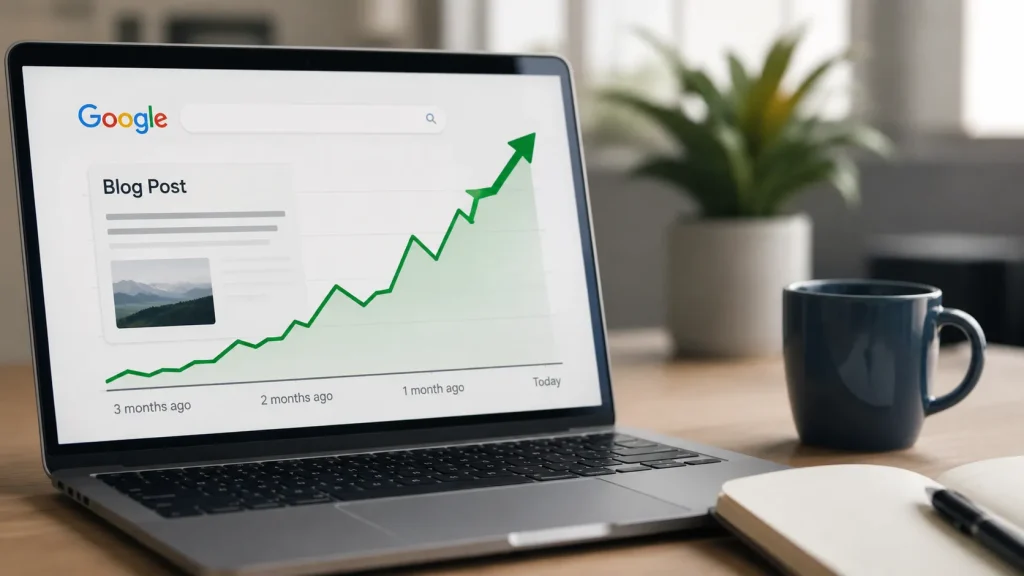
Blog Posts remain one of the most effective ways to attract long-term visitors from Google. Unlike social media posts, which often disappear within days, quality content can rank for years. According to BrightEdge research, organic search drives 53.3% of all website traffic. This makes search visibility one of the most valuable digital assets for businesses and publishers.
Strong Blog Posts answer questions that users actively search for. Google rewards content that demonstrates experience, expertise, authority, and trust. Pages that provide clear information often continue generating traffic long after publication. A well-written article published today can still attract visitors in 2028 or beyond.
We see this pattern across many industries. HubSpot reported that companies publishing blogs receive 55% more website visitors than those without blogs. The key lies in creating evergreen content that stays useful over time. Consistent publishing also helps search engines understand a site’s expertise. This improves overall rankings and creates additional opportunities to appear in search results.
How Blog Posts Create Evergreen Search Traffic
Evergreen content delivers value long after publication. Many users search the same questions every day. Articles that answer those questions can continue receiving clicks for years. Google updates rankings constantly, but useful content often maintains visibility.
Why Search Intent Matters
Search intent determines whether content satisfies readers. Informational searches dominate Google. People look for solutions, guides, and explanations. Blog Posts that match user intent have higher chances of ranking well.
For example, searches such as “how to start a blog” or “SEO tips for beginners” receive thousands of monthly searches. These topics remain relevant regardless of season. Ahrefs research shows that many top-performing pages generate traffic for more than three years.
Several factors support long-term rankings:
- Evergreen topics stay relevant.
- Detailed content improves user engagement.
- Internal links strengthen authority.
- Regular updates maintain freshness.
- Quality information builds trust.
Sites that consistently publish educational articles often see stronger organic growth. This creates a steady stream of visitors without paying for ads.
Google Rewards Helpful and Expert Content
Google introduced its Helpful Content System to prioritize people-first information. Content created for users performs better than content written solely for rankings. This approach encourages websites to focus on expertise and real experiences.
Experience and Authority Improve Rankings
Google evaluates signals related to experience and trust. Articles written from practical knowledge often provide deeper insights. Readers spend more time on pages that answer questions clearly. Higher engagement can support search performance.
According to Semrush, the average first-page result contains around 1,447 words. Longer articles often cover topics thoroughly. However, quality matters more than length. Clear explanations and factual information create better user experiences.
The table below highlights factors that influence long-term performance.
| Ranking Factor | Impact on Blog Posts | Benefit |
|---|---|---|
| Evergreen topics | High | Consistent traffic |
| Internal linking | High | Better page authority |
| Regular updates | Medium | Improved freshness |
| User engagement | High | Lower bounce rates |
| Expertise and trust | High | Higher rankings |
Professional publishers frequently refresh existing pages. Updating statistics and examples helps maintain relevance. This simple practice can revive older articles and increase search visibility.
Compounding Growth Makes Blog Posts Valuable
Blog Posts generate compounding returns over time. Each article creates another entry point into a website. As content grows, search visibility expands. More pages mean more opportunities to rank for keywords.
Older Content Often Produces Strong Results
Many websites receive significant traffic from articles published years earlier. HubSpot data showed that 75% of blog views came from older posts rather than recently published content. This demonstrates the lasting value of evergreen resources.
Compounding growth provides several advantages:
- Reduced dependence on paid advertising.
- Lower customer acquisition costs.
- Continuous lead generation.
- Increased authority within a niche.
- Higher overall website visibility.
Experienced SEO professionals often compare blogging to building a library. Every article adds another resource that users can discover. Over time, these pages work together to strengthen domain authority and attract more visitors.
Consistent publishing also creates topic clusters. Google better understands relationships between articles. This improves rankings across multiple keywords and strengthens the site’s reputation. Get started with our in-depth resource on How to Track and Measure SEO Success with Google Analytics.
Updating Blog Posts Extends Their Lifespan
Content updates help maintain rankings. Google values accuracy and relevance. Refreshing older pages can improve performance without creating entirely new articles.
Small Changes Deliver Big Results
Adding current statistics, improving headings, and expanding sections often produce measurable gains. SEO agencies frequently observe traffic increases after updating existing content. Search engines recognize refreshed information and reward useful pages.
Important update practices include:
- Replace outdated numbers.
- Add new examples.
- Improve readability.
- Strengthen internal links.
- Optimize headings and images.
Real experience shows that updated articles often regain lost rankings. Businesses that review content every six months typically maintain stronger search visibility. Regular maintenance turns Blog Posts into long-term digital assets that continue generating traffic.
Conclusion
Blog Posts provide lasting value because they align with how people search online. Evergreen topics, helpful information, and regular updates support long-term rankings. Research from BrightEdge, HubSpot, and Semrush confirms the power of organic search.
Strong content creates compounding growth and reduces reliance on paid traffic. By focusing on expertise and user needs, websites can build resources that continue attracting visitors for years. Consistent publishing and periodic updates transform articles into assets that deliver measurable results over time.